

Raspberry & Vanilla Macarons recipe


Macarons with crisp shells, chewy centres and a silky vanilla buttercream, finished with Fortnum & Mason Raspberry Preserve.
There are many ways to make macarons; this Fortnum’s recipe is designed to make them as achievable as possible for home bakers, with plenty of guidance and visual cues to help you along the way.
Once you've mastered the shells and vanilla buttercream, you can easily create your own flavour combinations using other jams or fillings for the centre and tinting the shells to match.
Macarons reward patience, so take your time and trust the process. Don't worry if your first batch isn't perfectly uniform - they'll still be utterly delicious, and every batch is a chance to build your confidence and refine your technique.
Ingredients
MAKES 25-30 MACARONS
For the Macaron Shells
100g egg whites (usually from 3-4 large eggs), at room temperature
1g cream of tartar (½ tsp)
Few drops of vinegar
½ tsp vanilla extract (optional)
80g caster sugar
1-2 drops pink gel food colouring
125g extra-fine almond flour or ground almonds
125g icing sugar
For the Vanilla Buttercream
100g unsalted butter, softened
200g icing sugar, sifted
1 tsp vanilla bean paste or vanilla extract
Before You Begin
A silicone baking mat is preferable as it helps the macarons bake evenly and release more easily. You can buy ones that have macaron outlines on them which can be helpful for piping.
If you can find it, extra-fine almond flour produces the smoothest shells, but ground almonds work well too. If using ground almonds, pulse them very briefly in a food processor to make them as fine as possible. This isn't essential, but it can really improve the finished shells.
After sieving, make sure to discard any larger pieces of almond rather than forcing them through the sieve.
The macarons may look quite flat once piped - don't worry, this is completely normal, and if you've reached the correct consistency they will puff up in the oven.
Don't rush the drying stage. Allowing the shells to form a skin is one of the most important steps for achieving perfect feet.
Method
Prepare the Egg Whites. For the most reliable results, separate the egg whites the day before baking. Cover and refrigerate for 24 hours, then bring them back to room temperature before starting. Line two or three large baking trays with silicone baking mats (or baking parchment if preferred).
Prepare the Dry Ingredients. Combine the almond flour (or ground almonds) and icing sugar. If using ground almonds, pulse them very briefly in a food processor for a few seconds until finer. Sift the mixture into a bowl, discarding any larger pieces that remain in the sieve. Set aside.
Make the Meringue. Using a clean glass or metal bowl wiped down with a drop of vinegar, use an electric whisk or standing mixer to whisk the egg whites with the cream of tartar until they become frothy. Gradually add the caster sugar a little at a time while continuing to whisk. Keep whisking until the meringue becomes thick, glossy and holds stiff peaks. If using food colouring, gently whisk it through the finished meringue on the lowest speed setting.
Macaronage. Add the dry ingredients to the meringue in three additions, folding gently with a spatula after each addition. Once fully incorporated, continue folding until the batter slowly flows from the spatula in a continuous ribbon. A useful guide is the figure-of-eight test: the batter should be able to form a figure eight without breaking, disappearing back into itself after around 10 seconds. Avoid over-mixing, as this will produce flat macarons.
Pipe the Shells. Transfer the batter to a piping bag fitted with a 5mm round nozzle. Pipe rounds approximately 4-5cm in diameter onto the prepared trays, leaving space between each one. The batter will spread slightly after piping. Firmly tap each tray on the work surface several times to release trapped air bubbles. Pop any remaining bubbles with a cocktail stick.
Dry the Shells. Leave the trays uncovered at room temperature until the tops no longer feel tacky when lightly touched and take on a matte appearance. This usually takes 30-60 minutes, depending on the weather.
Bake. Preheat the oven to 160°C (140°C fan). Bake one tray at a time for 12-14 minutes. Leave the shells to cool on the baking tray for around 15 minutes before carefully peeling them off the baking parchment or silicone mat and transferring them to a plate or tray to cool completely.
Make the Buttercream. Beat the softened butter until smooth and pale. Gradually beat in the sifted icing sugar, followed by the vanilla. Transfer to a piping bag.
Fill the Macarons. Pair shells of a similar size. Pipe a ring of vanilla buttercream around the edge of one shell, leaving a small well in the centre. Spoon a little Fortnum & Mason Raspberry Preserve into the middle before sandwiching with the second shell. Repeat with the remaining macarons.
Mature the Macarons. Although tempting to eat immediately, macarons are at their best after maturing. Store them in an airtight container in the refrigerator for 24 hours, then allow them to come to room temperature for around 20–30 minutes before serving. The shells will become wonderfully soft and chewy while still retaining their delicate crisp exterior.
Variations. Once you've mastered the shells and vanilla buttercream, try creating your own combinations by using other ingredients for the centre, such as lemon curd, pistachio butter, chocolate hazelnut spread, salted caramel, different jams, or even marmalade. Tint the shells to complement each flavour for a beautiful assortment.

Inspiration
Discover The Journal, home to a host of our most delicious stories.

Rum-Berry Sponge with Honey Scented Cream
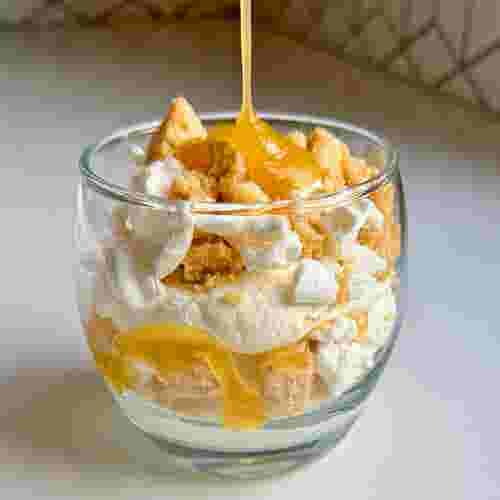
Lemon Curd Eton Mess