
The History of The Scotch Egg
THE GREATEST EGG OF ALL
THE MIGHTY SCOTCH EGG

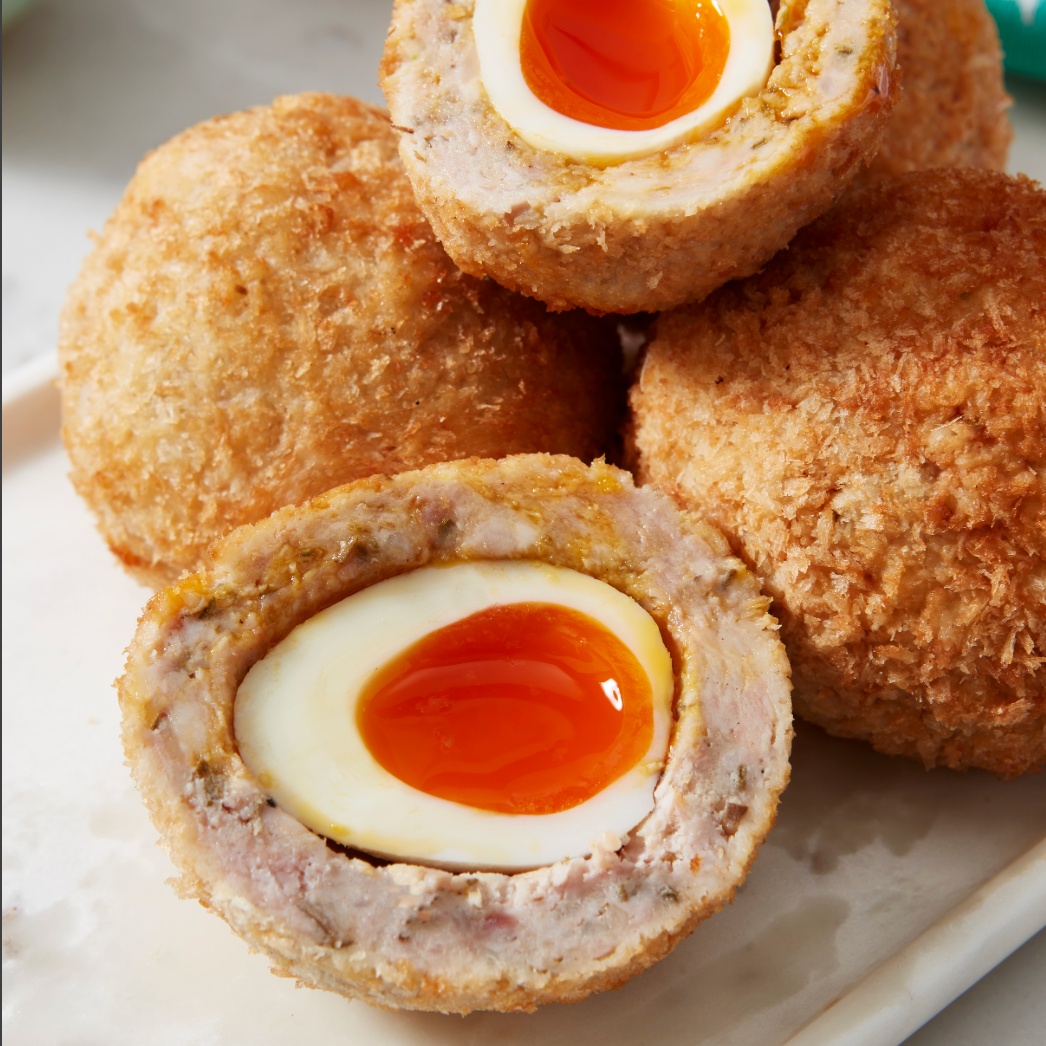

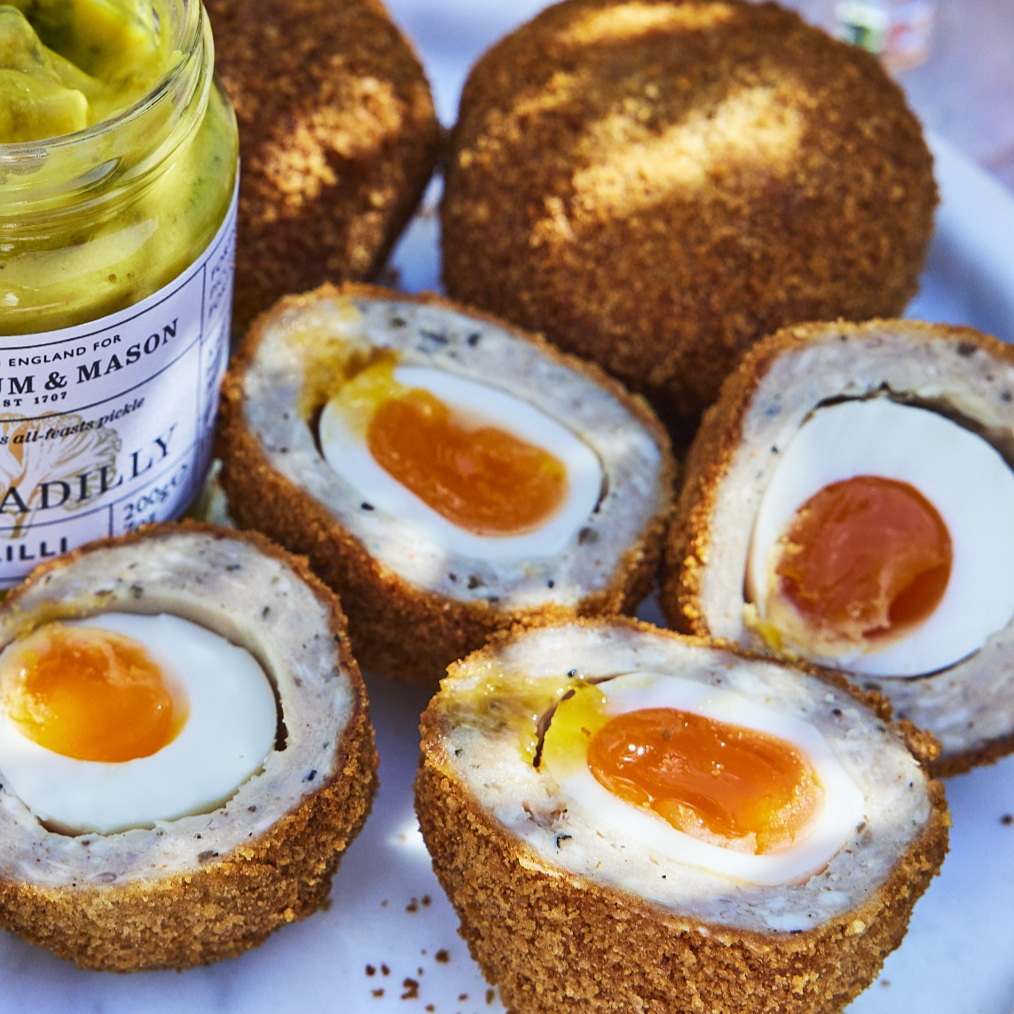
The first and the best, we created the Scotch Egg in 1738 as a meal for travellers heading west from Piccadilly. No one knows if there was a certain recipe that inspired the Scotch Egg, but there are traditional dishes mixing meat and a boiled egg across the world. It is possible that nargisi kofta, an Indian dish made from a hard-boiled egg encased in minced meat, fried and served in a gravy, was brought back by employees of the East India Company. The Low Countries had their own version, described as ‘bird’s nest’ or ‘peekaboo meatball’, and there are versions (mostly served with gravy) found in Indonesia, Poland and Brazil.
Back then ours consisted of a pullet’s egg – so rather smaller than a chicken’s egg – surrounded by forcemeat, dipped in egg wash and then in breadcrumbs, seasoned with salt, pepper and mace, and deep fried. At the time, we referred to it as a ‘scotched’ egg because of anchovies added to the meat to give it a stronger flavour, and to cut through the fattiness of the meat.
Then came the dark days. A shortage of meat during the Second World War meant that the quality of the Scotch Egg suffered, and we lost our confidence somewhat. Food manufacturing embraced technology more and more, and by the 1960s and ‘70s, our breadcrumbed hero lost its superpowers thanks to less-than-satisfactory rivals who were using inferior, over-processed meat and the wrong kind of breadcrumbs. As a result it became perceived by many to be rather naff and unfashionable.
Through these turbulent times it’s been up to us to keep the standard going and maintaining its position as a desirable product – at least when Fortnum’s produces it. Always made with care and love, ours is the real thing.
Despite these challenges its appeal comes down to the fact that it has remained an astonishingly simple dish to make and, even using the highest quality of ingredients, relatively economical too. It is also supremely adaptable, and over the years we have not been afraid to experiment with new kinds of flavours and ingredients, from black pudding to vegetarian. The egg has changed over the years too. Hen eggs are most commonly used as the centre of a Scotch Egg today, although we have also used quail, duck and goose eggs, elevating it to finger food at cocktail parties. The meat is nearly always pork sausage meat, with no anchovy.
Recently we have taken the Scotch Egg into the realm of confectionery, with an Easter Scotch Egg, made from a simnel milk chocolate praline with an orange ganache centre, coated in roasted hazelnuts and cocoa nibs. Simnel is a cake that has been made at Easter in England for many centuries. It is appropriate that a season that celebrates the egg, and is now associated with chocolate, should have its own sweet Scotch Egg.
Almost 300 years later – and with life as busy as ever – the Scotch egg still reigns supreme; often imitated, but ours still sits proudly as the original portable pick-me-up.

Fortnum's Icons | The Scotch Egg
YouTube Series
In this delicious series, we invite chefs and special guests to put their own twist on the iconic Scotch egg. From classic techniques to bold reinventions, each episode showcases a unique take on this beloved dish, all crafted in the heart of Piccadilly.


Fortnum's Scotch Egg Recipe
Ingredients
Makes 6
3 tablespoons of Olive Oil
1 large onion, finely chopped
2 large garlic cloves, crushed
400g sausages, skins removed
7 medium eggs
75g plain flour
75g breadcrumbs
Vegetable oil, for deep-frying
Salt and freshly ground black pepper
Method
STEP 1
Heat the olive oil in a small pan, then add the onion and cook gently for 5 minutes. Stir in the garlic and thyme, cover and cook for about 20 minutes, until the onion is soft but not coloured. Remove from the heat and leave to cool.
STEP 2
Put the meat into a bowl and mix with the cooked onion mixture and season well with salt and pepper.
STEP 3
Put 6 of the eggs into a large pan of gently simmering water and cook for 6 minutes. Drain, then leave under cold running water until they are completely cold. Peel off the shells.
STEP 4
Divide the meat mixture into 6 equal portions, weighing them for accuracy, if you like. Roll out each one between 2 sheets of cling film so that it is big enough to wrap round an egg. Lightly flour the eggs, then wrap each one in a piece of the mixture.
STEP 5
Put the remaining egg into a shallow bowl and beat well. Put the remaining flour into another bowl and the breadcrumbs into a third. Remove the cling film, then dip the eggs first into the flour, then into the beaten egg and finally into the breadcrumbs, patting them on well with your hands. Chill for an hour or so until the coating is firm.
STEP 6
Heat the oil to 170C in a deep-fat fryer or a large, deep saucepan (if you use a saucepan, don’t fill it more than a third full, or you risk it boiling over). Add the Scotch eggs to the hot oil, cooking them in batches so as not to overcrowd the pan. Fry for 7-8 minutes, until they are a deep golden brown, then drain well on kitchen paper. Serve warm.